
ISF
ISF (Importer Security Filing)
ISF, commonly referred to as "10+2 Filing," is a security requirement imposed by U.S. Customs on importers. It requires specific data to be submitted prior to shipping goods to ensure compliance with U.S. import security regulations. The "10+2" refers to 10 pieces of importer data and 2 pieces of carrier data.
ISF is typically required for ocean freight shipments. Failure to file ISF can lead to penalties and shipment delays.
Note: ISF filings are often handled by the importer or an appointed customs broker.
Create ISF Filing
1. Navigate to Customs House > ISF. 2. Click + Add to open the ISF Filing creation page. 3. Complete the following five parts of information and click Save:
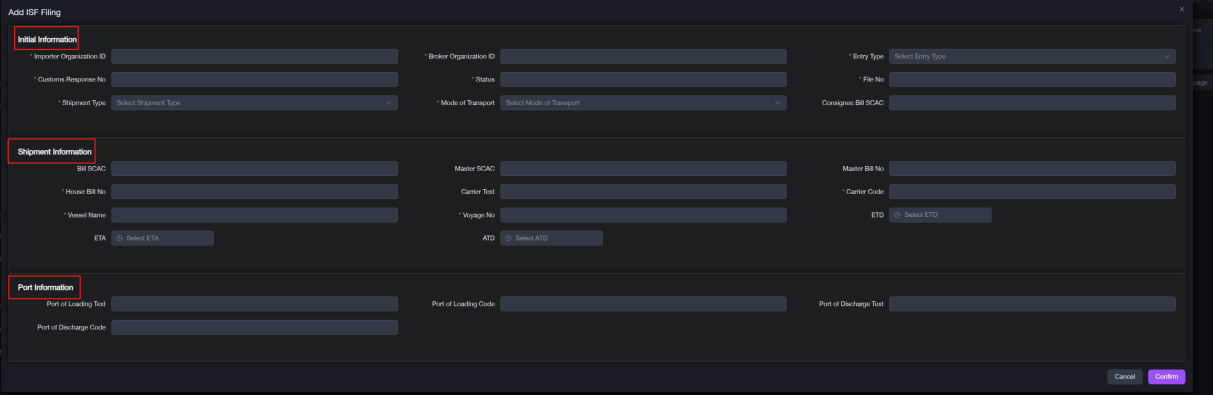
Initial Info
Field Name | Description | Required |
|---|---|---|
Importer Organization ID | Identifies the organization or company submitting the import declaration. | Yes |
Broker Organization ID | Represents the customs broker handling the import declaration. | Yes |
Entry Type | Specifies the type of imported goods. | Yes |
Shipment Type | Indicates the type of shipment being imported (e.g., FCL, LCL). | No |
File No. | Unique identifier for the filing document used for tracking declaration details. | Yes |
Customs Response No. | Identifier provided by customs as feedback for the filing. | Yes |
Status | Current filing status. | Yes |
Consignee Bill SCAC | Identifies the consignee organization receiving the goods. | No |
Mode of Transport | Specifies the mode of transportation used (e.g., Sea, Air). | No |
Shipment Info
Field Name | Description | Required |
|---|---|---|
Bill SCAC | SCAC (Standard Carrier Alpha Code) identifying the carrier. | Yes |
Master SCAC | SCAC code for the primary carrier, if different from the individual carrier. | No |
Master Bill No. | Number for the master bill of lading issued by the carrier. | Yes |
House Bill No. | Number for the house bill of lading issued by the freight forwarder. | Yes |
Carrier Text | Additional descriptive details about the carrier. | No |
Carrier Code | Unique identifier for the carrier. | Yes |
Vessel Name | Name of the vessel transporting the goods. | Yes |
Voyage No. | Number identifying the specific voyage of the vessel. | Yes |
ETA | Estimated Time of Arrival (date and time). | No |
ETD | Estimated Time of Departure (date and time). | No |
ATA | Actual Time of Arrival (date and time). | No |
ATD | Actual Time of Departure (date and time). | No |
Port Info
Field Name | Description | Required |
|---|---|---|
Port of Loading Text | Name of the port where the goods are loaded. | Yes |
Port of Lading Code | Code for the port of lading. | Yes |
Port of Discharge Text | Name of the port where the goods are unloaded. | Yes |
Port of Discharge Code | Code for the port of discharge. | Yes |
Container Info
Field Name | Description | Required |
|---|---|---|
ISF ID | Identifier for the security filing. | Yes |
Container No. | Unique identifier for the container. | Yes |
Container Size Code | Code representing the size of the container (e.g., 20FT, 40FT). | No |
Container Description Code | Additional descriptive code for the container type. | No |
Item Info
Field Name | Description | Required |
|---|---|---|
ISF ID | Identifier linking the item to the ISF filing. | Yes |
Manufacturer Party ID | Identifier for the manufacturer of the goods. | No |
Item Name | Name of the product being shipped. | No |
Product No. | SKU (Stock Keeping Unit) for the product. | No |
PO No. | Purchase Order number associated with the shipment. | No |
Country of Origin Code | Code identifying the country where the goods were manufactured or produced. | Yes |
HTS No. | Harmonized Tariff Schedule code defining the product's classification and applicable tariffs. | Yes |